


Liquefaction Countermeasures
Quantitative Evaluation of the Liquefaction Mitigation Effect of the TNF 2.0 Method
We verify the effectiveness of the TNF 2.0 method against liquefaction through FEM analysis and reflect the results in our designs. Liquefaction risk is evaluated using “shear strain amplitude” as an indicator, contributing to safe and reliable structural design.
- Share this article
Evaluation of Liquefaction Risk
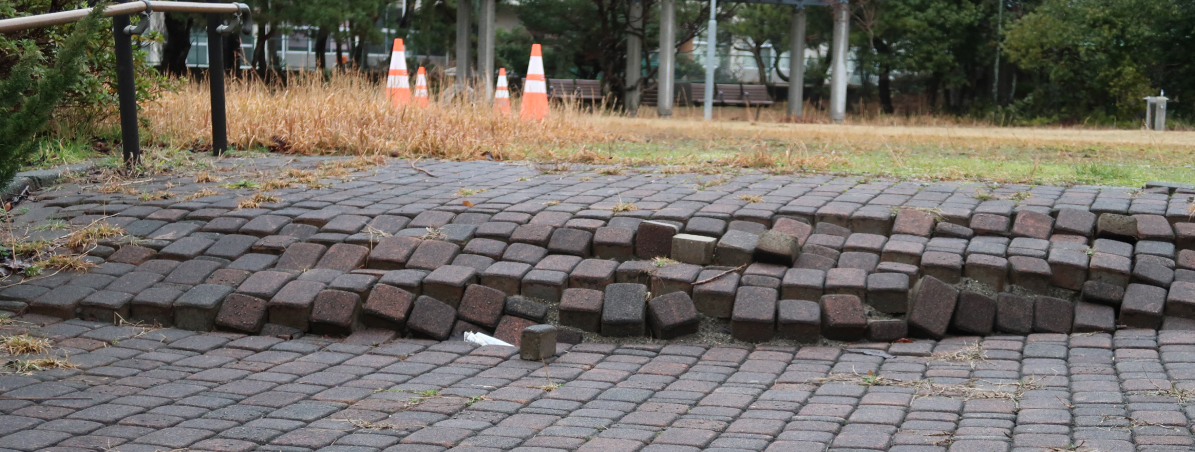
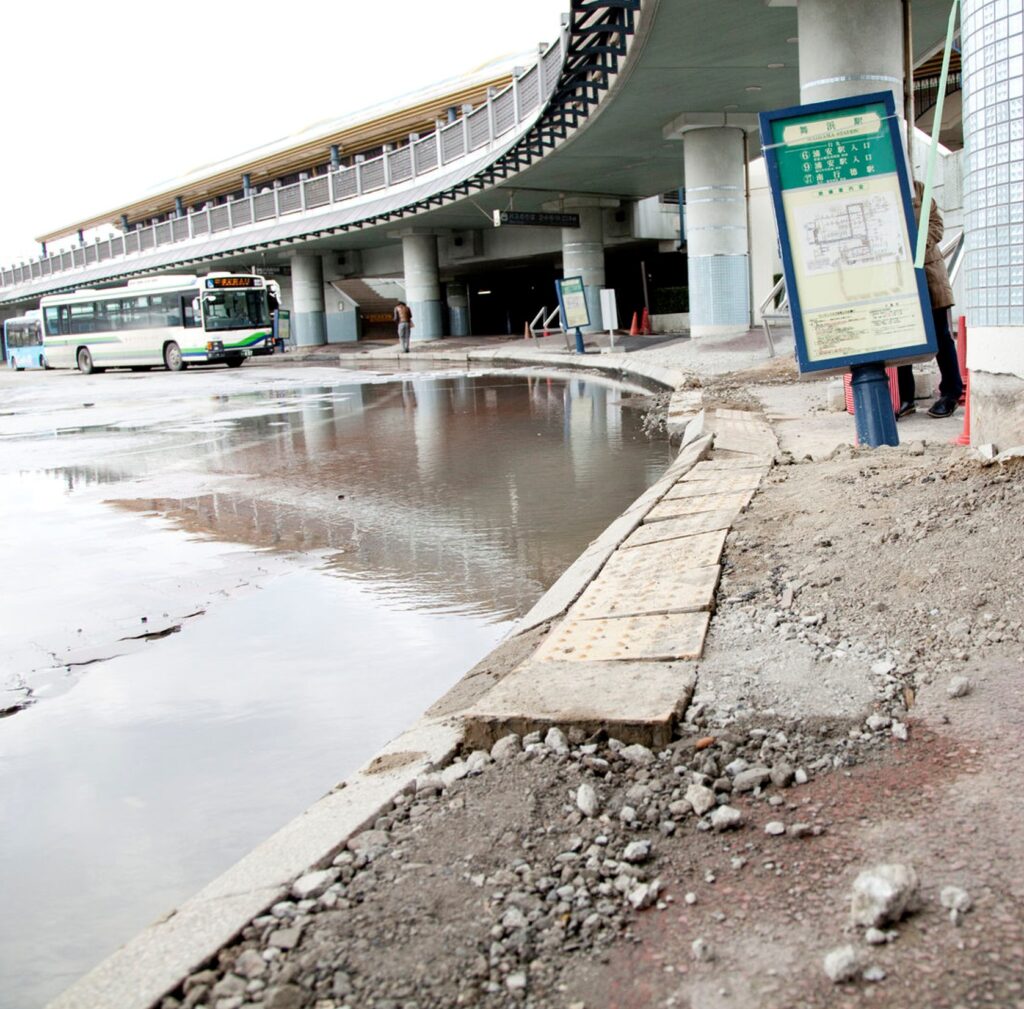
Liquefaction is a phenomenon in which ground behaves like a fluid due to strong shaking during large earthquakes. Sand and water may erupt to the ground surface, potentially causing serious damage such as building tilting and settlement. In particular, liquefaction occurring in soil layers up to approximately 6 meters below ground level is considered to have the greatest impact on buildings.
The TNF 2.0 method is a shallow ground improvement technique that improves the soil approximately 2–3 meters directly beneath a building. By increasing the strength of layers prone to liquefaction, it prevents a reduction in ground bearing capacity. We numerically evaluate liquefaction risk using FEM time-history response analysis with a 3D ground model.
Liquefaction Prevention Effect of the TNF 2.0 Method
Mechanism of Liquefaction
Under normal conditions, soil particles support each other and remain stable. When this contact collapses due to seismic shaking, the ground temporarily loses its bearing capacity, and sand and water may erupt to the surface. As a result, damage such as building tilting may occur.
Comparison with Pile Foundation Methods
With conventional pile foundations, ground settlement due to liquefaction may cause pile heads to become exposed.
In such conditions, resistance to lateral forces is reduced, which may lead to pile damage or deformation and have a serious impact on the building.
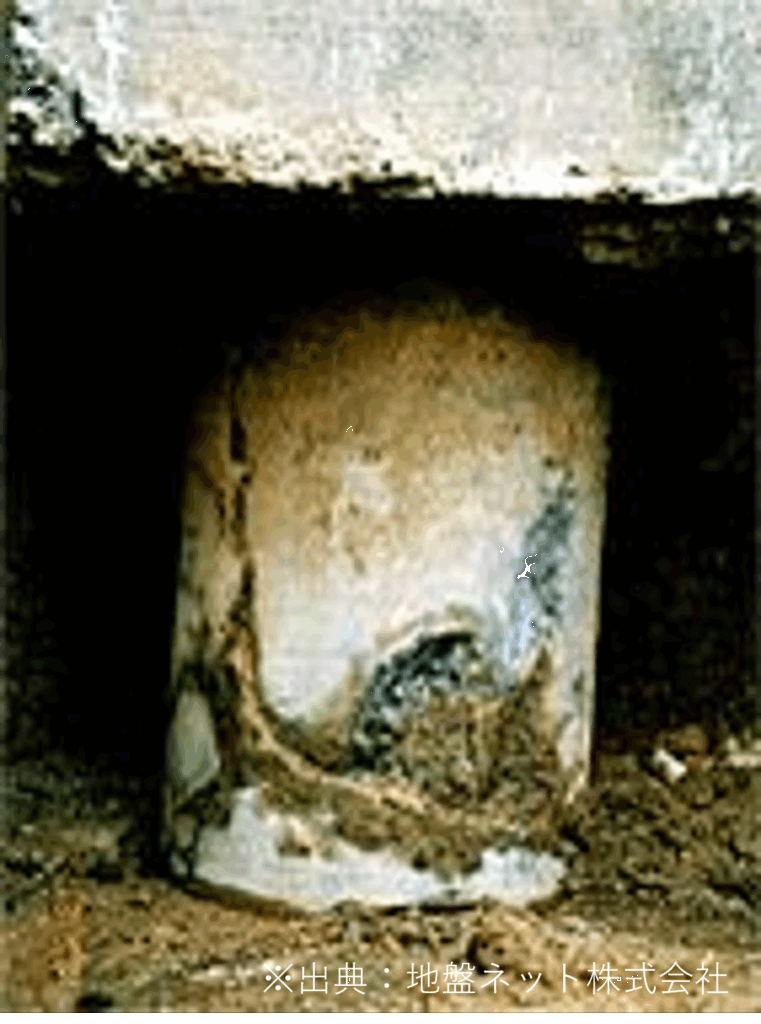
Exposed pile heads due to ground settlement caused by liquefaction
In contrast, shallow ground improvement methods such as the TNF method are considered effective countermeasures against liquefaction.
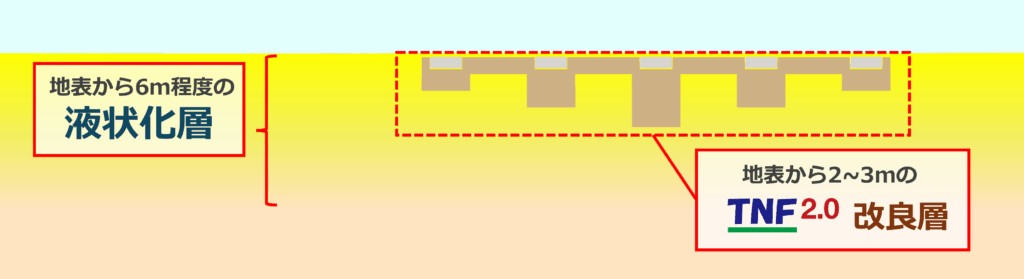
It is said that building damage becomes most severe when liquefaction occurs in soil layers up to approximately 6 meters below ground level.
The TNF method improves the ground approximately 2–3 meters beneath the building, increasing the strength of liquefaction-prone layers and suppressing the reduction in ground bearing capacity due to seismic motion, thereby mitigating differential settlement.
Noto Peninsula Earthquake Survey
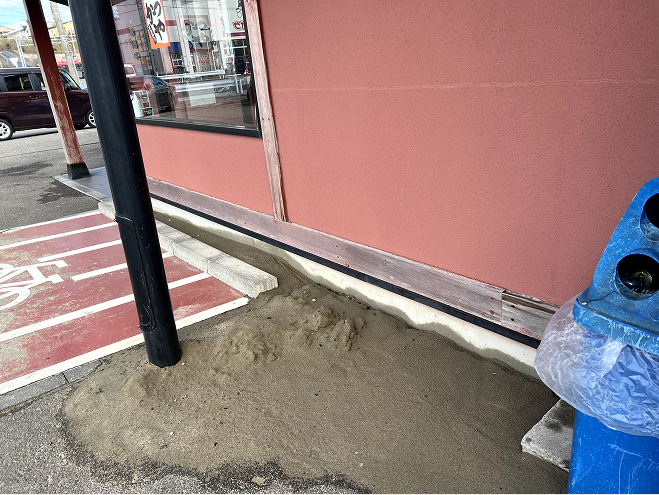
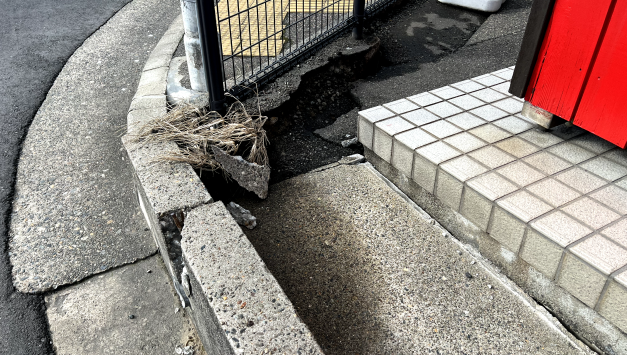
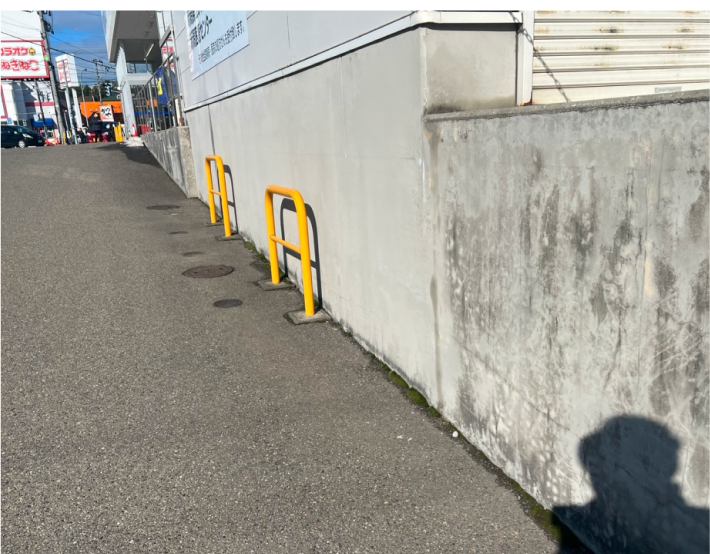
In the Noto Peninsula Earthquake that occurred in January 2024, we compared the damage conditions of buildings constructed with the TNF method and those using other methods within the same block.
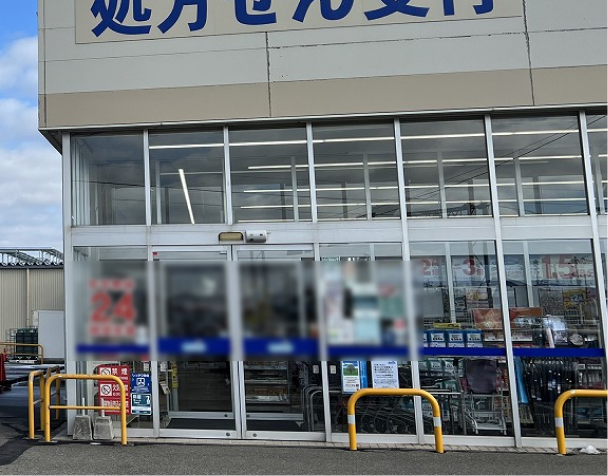
As a result of the survey, no liquefaction damage was confirmed in buildings using the TNF method, demonstrating its effectiveness as a liquefaction countermeasure.
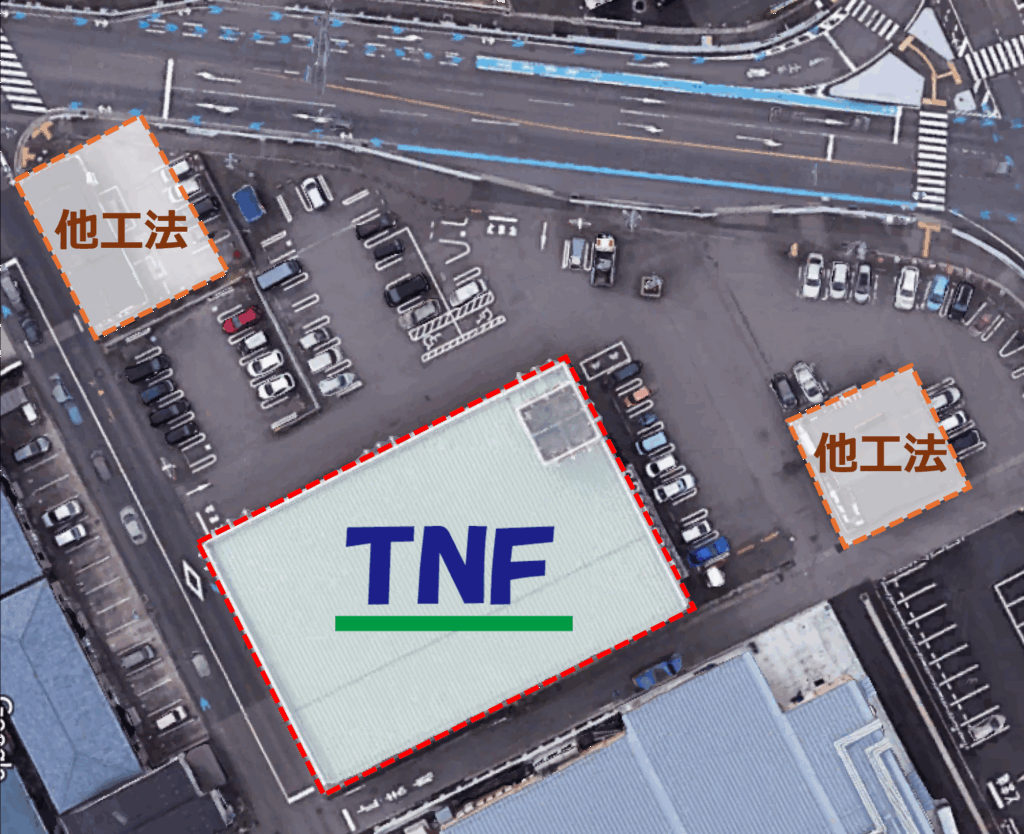
Buildings using other methods: Sand boils and cracks caused by liquefaction occurred, resulting in business suspension.
Buildings using the TNF method: No liquefaction damage; normal business operations continued.
[Earthquake] Noto Peninsula Earthquake Survey
Liquefaction Analysis Using FEM
We evaluate liquefaction damage risk using FEM time-history response analysis with a 3D ground model. This analysis enables high-precision understanding of stress distribution and deformation behavior even under complex ground conditions, allowing quantitative verification of the effectiveness of liquefaction countermeasures at the design stage.
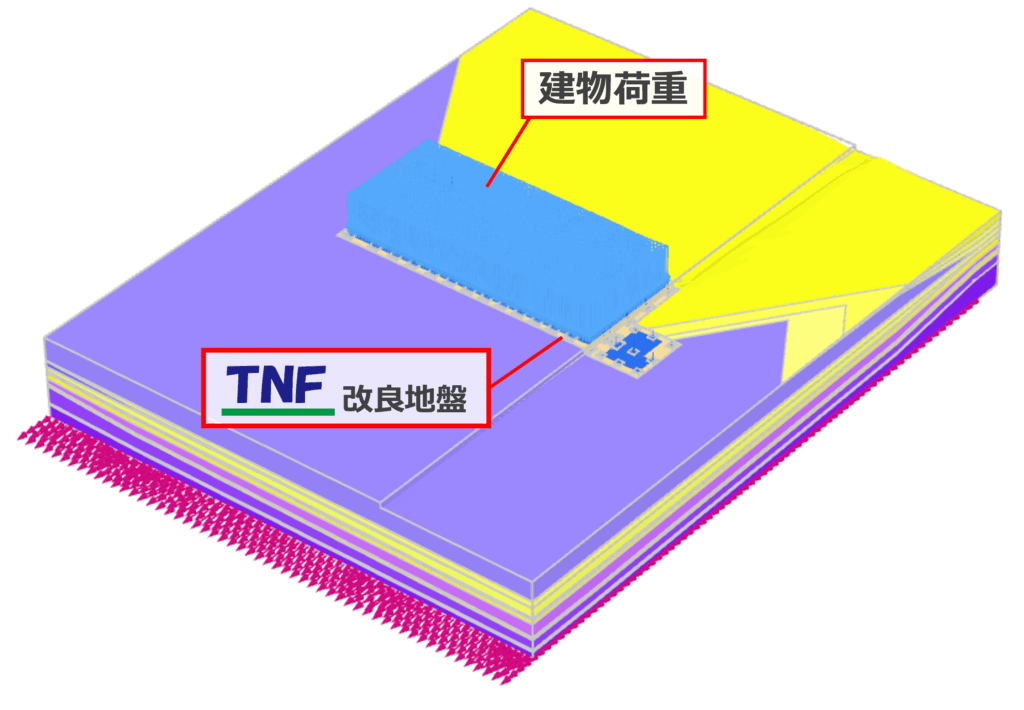
*Stratigraphy reproduced based on borehole data from multiple locations obtained through ground investigation
Liquefaction Risk Evaluation Index
In the analysis, “shear strain amplitude” is calculated based on the design guidelines of the Architectural Institute of Japan and used to evaluate liquefaction risk.
According to building standards:
・Shear strain amplitude less than 5%: Low liquefaction risk
・Shear strain amplitude 5% or greater: Increased liquefaction risk