Ground analysis by the Finite Element Method (FEM)
Analytical Technologies Supporting Safety and Reliability
At our company, we conduct FEM analyses using 3D models. By calculating consolidation settlement and evaluating liquefaction risk, we ensure reliable and robust design outcomes.
- Share this article
Ground Analysis Using FEM
FEM (Finite Element Method) is a representative technique for numerically analyzing and predicting stresses and deformations in structures and ground.
Ground conditions consist of multiple soil layers intricately overlapping, and their behavior is not simple. With conventional design calculations alone, it may be difficult to adequately evaluate such complex behavior. Therefore, higher-precision ground simulations are required.
At our company, we use FEM-based ground analysis to verify building safety with respect to long-term consolidation, in which settlement continues over an extended period even after completion, and liquefaction, which occurs during earthquakes and can cause severe damage to buildings.
Analysis Using 3D Ground Models
In FEM-based ground analysis, computations are time-consuming, so analyses using 2D models (ground cross-section models) are often employed. However, by introducing high-performance computers, our company performs ground analysis using 3D models (three-dimensional ground models).
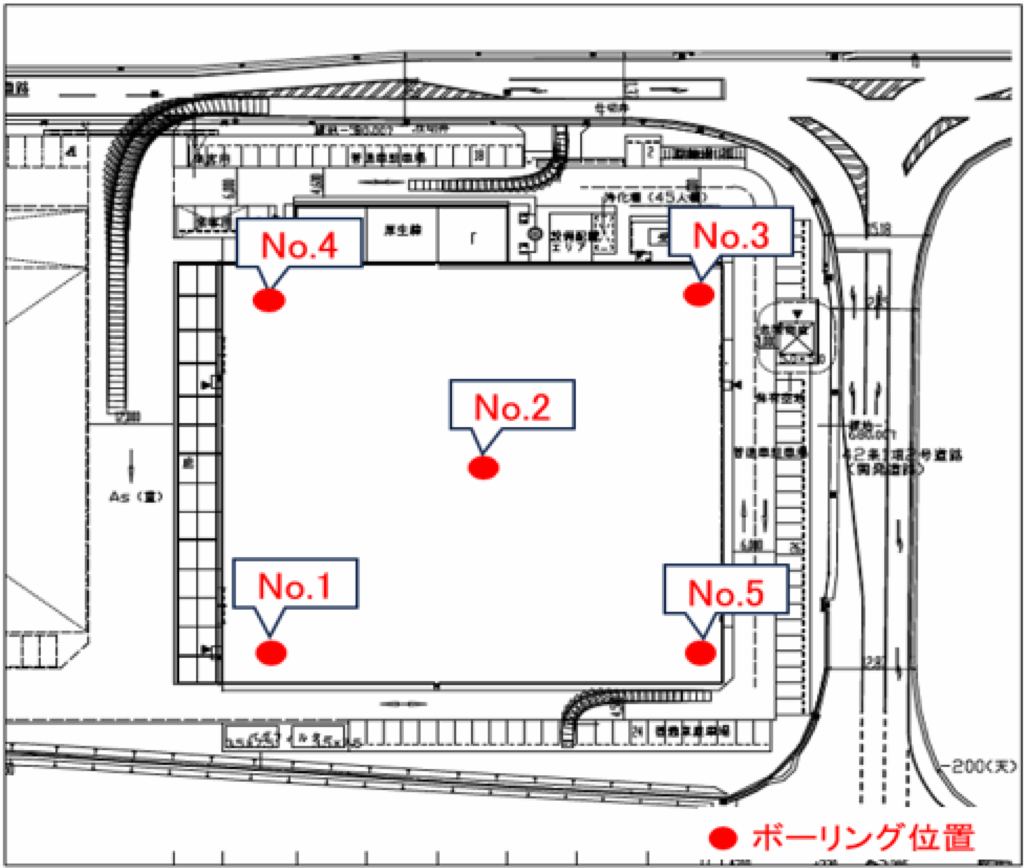
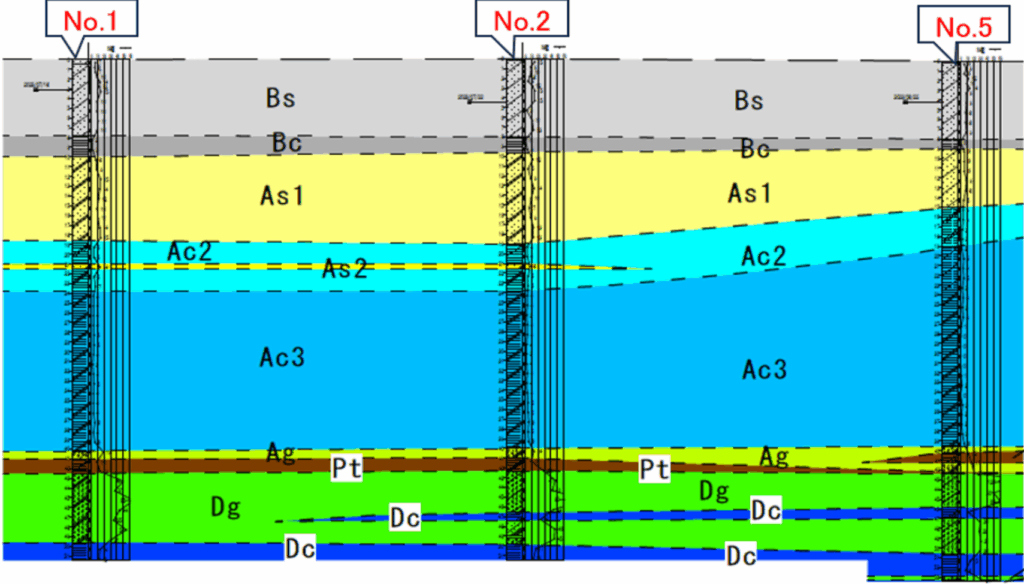
A 3D model is created by estimating soil layers based on borehole investigation data obtained at several locations. By conducting ground analysis with a 3D model, it becomes possible to simulate stress distribution and deformation more accurately, even in complex ground conditions.
Workflow for Creating a 3D Ground Model
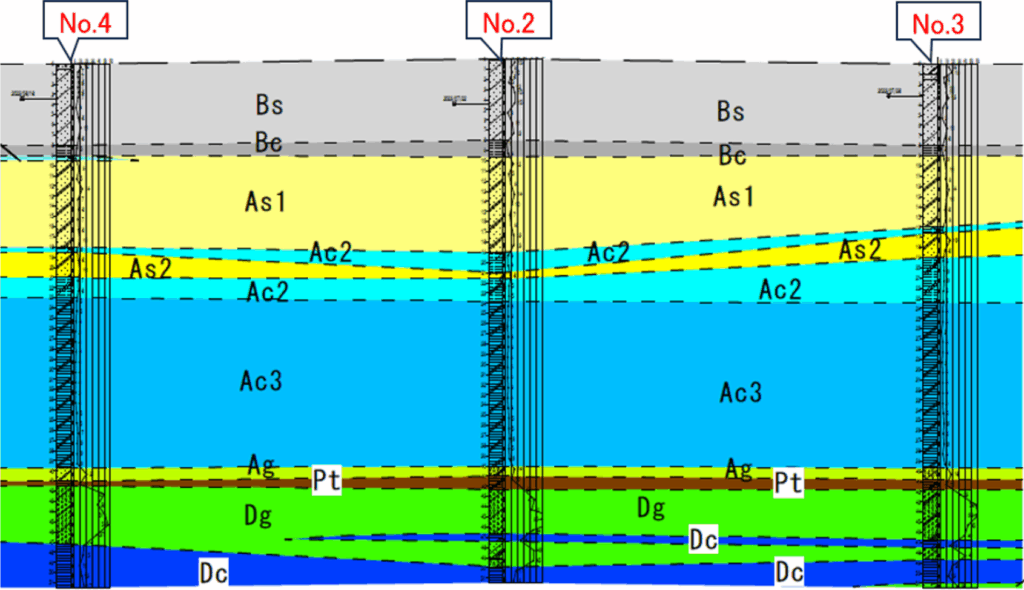
A 3D ground model is created by estimating soil layers from borehole investigation data collected at several points.
Borehole Investigation
Planar Ground Estimation Using Borehole Logs
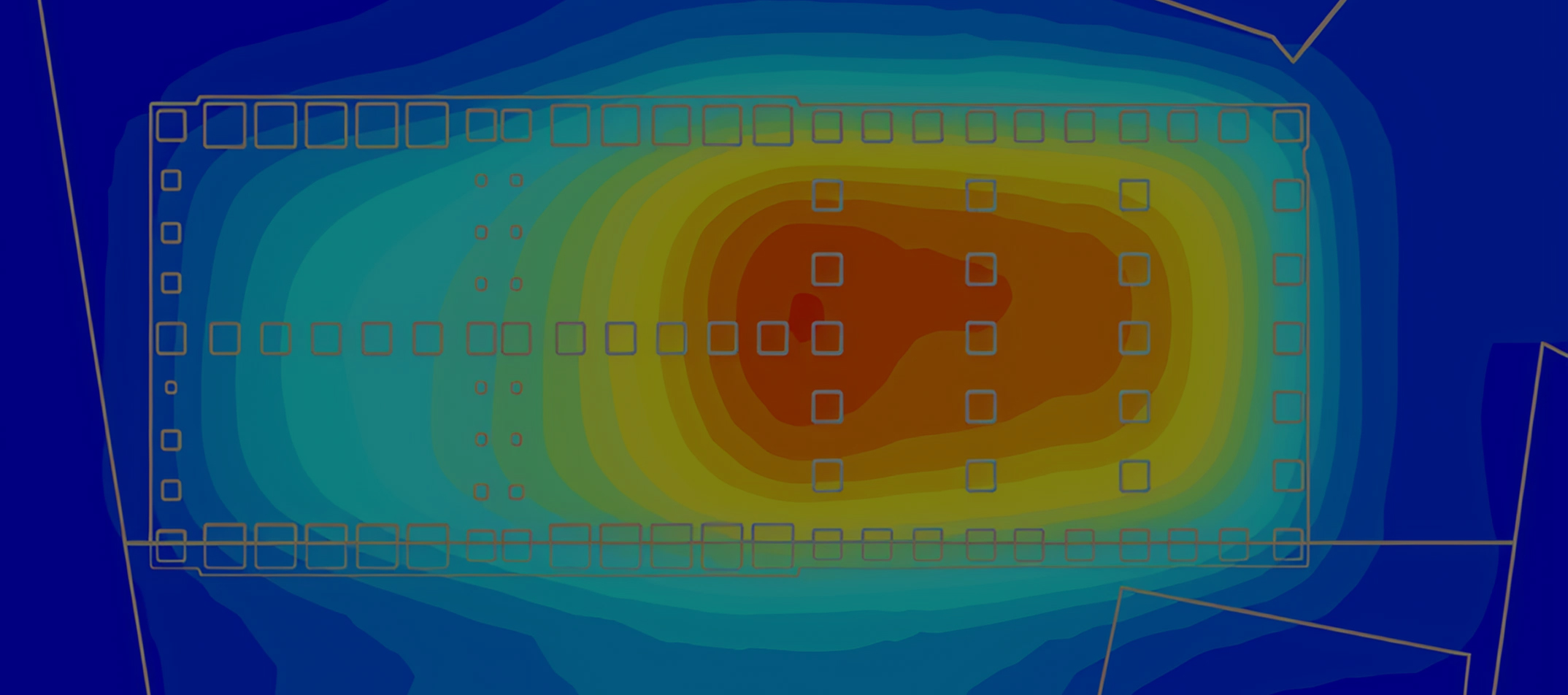
Creation of a Three-Dimensional Ground Model
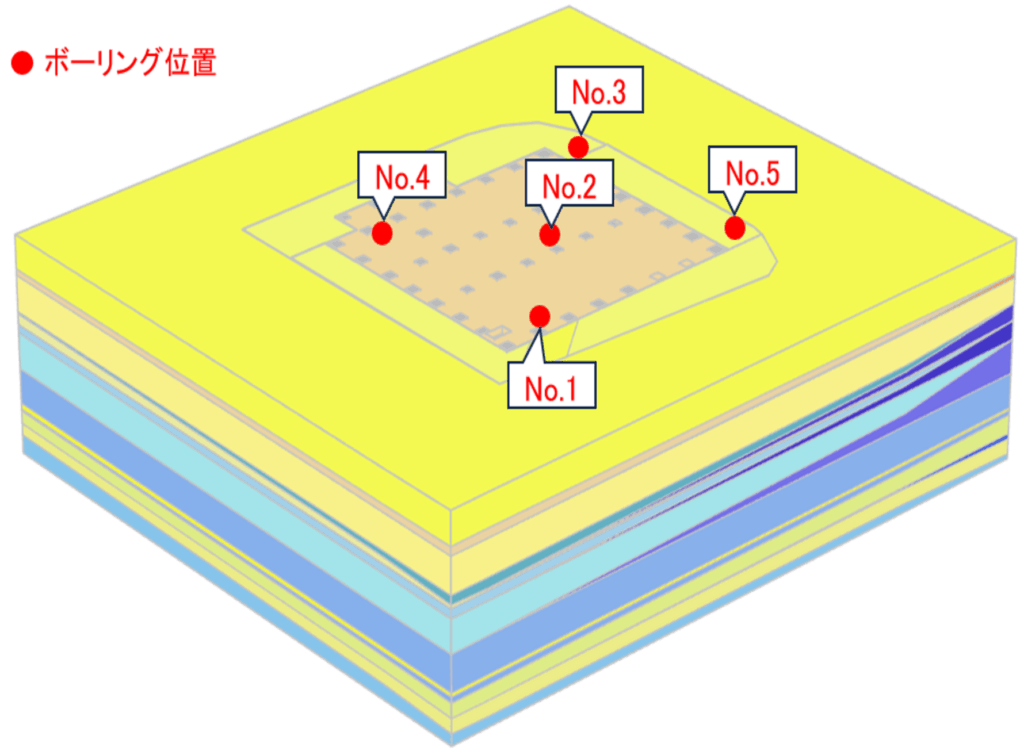
Software used: PLAXIS 2D / PLAXIS 3D (Bentley Systems, USA)
Consolidation Settlement Analysis
Consolidation is a settlement phenomenon that occurs as pore water in clay layers is expelled over a long period of time.
In some cases, damage becomes apparent several years after completion, making prediction and countermeasures difficult. In particular, when differential settlement occurs, continued use of the building can become problematic.
In recent years, advances in research have made it possible to calculate settlement using simplified methods in general design practice. However, when ground conditions are complex or building loads are large, the accuracy of such methods is limited.
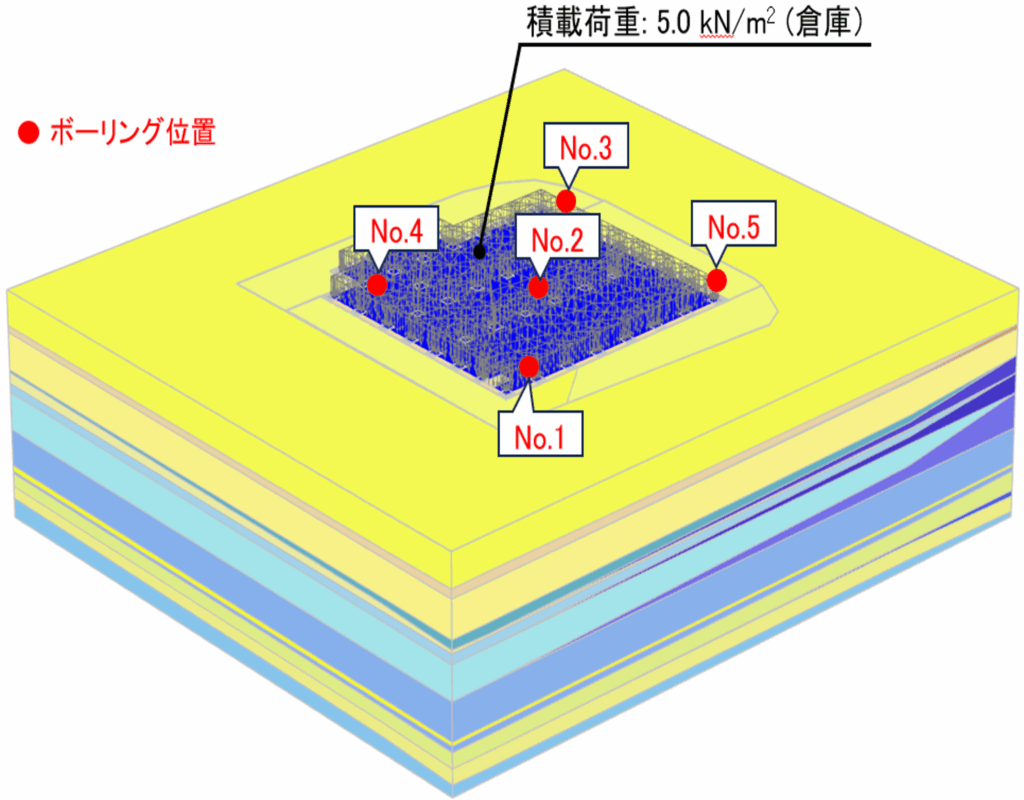
At our company, we perform FEM analysis using 3D models to precisely evaluate settlement caused by consolidation.
Settlement Calculation Considering Live Loads
Liquefaction Analysis
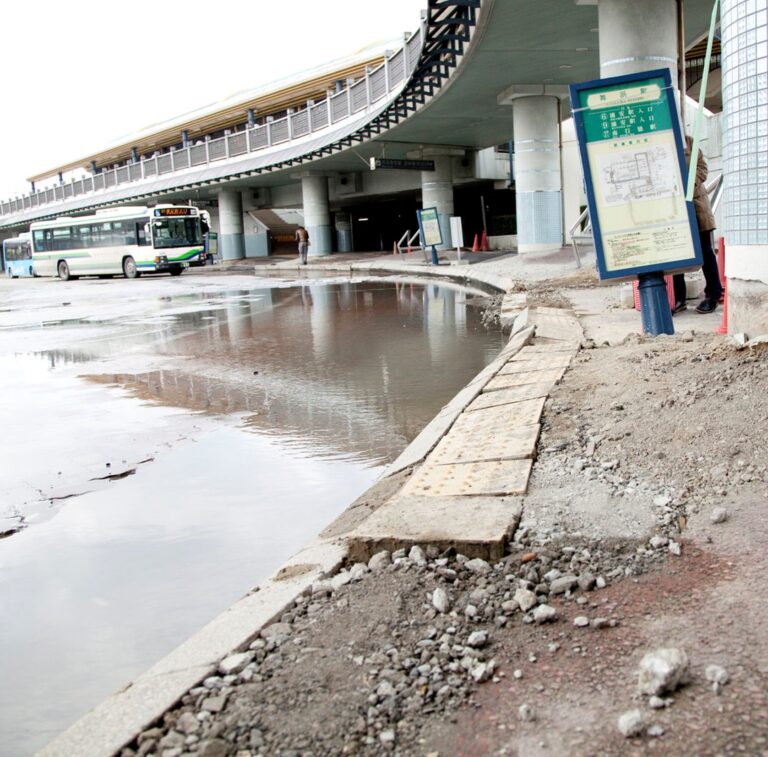
During earthquakes, the ground may behave like mud, causing a phenomenon known as liquefaction, in which buildings tilt or sink. Even buildings supported by pile foundations can suffer serious damage, such as exposure or failure of piles.
On the other hand, shallow ground improvement methods, including our TNF method, are generally known to be highly resistant to liquefaction.
Safety Evaluation Using Advanced Technologies
To further enhance safety, our company performs FEM time-history response analysis using 3D models.
Through this analysis, we calculate shear strain amplitude within the ground to evaluate the risk of liquefaction. At the same time, surface settlement is also computed, and these results are incorporated into building design to ensure higher reliability and safety.
Liquefaction Analysis Case Study for the TNF Method (Earthquake Acceleration: 150 gal)
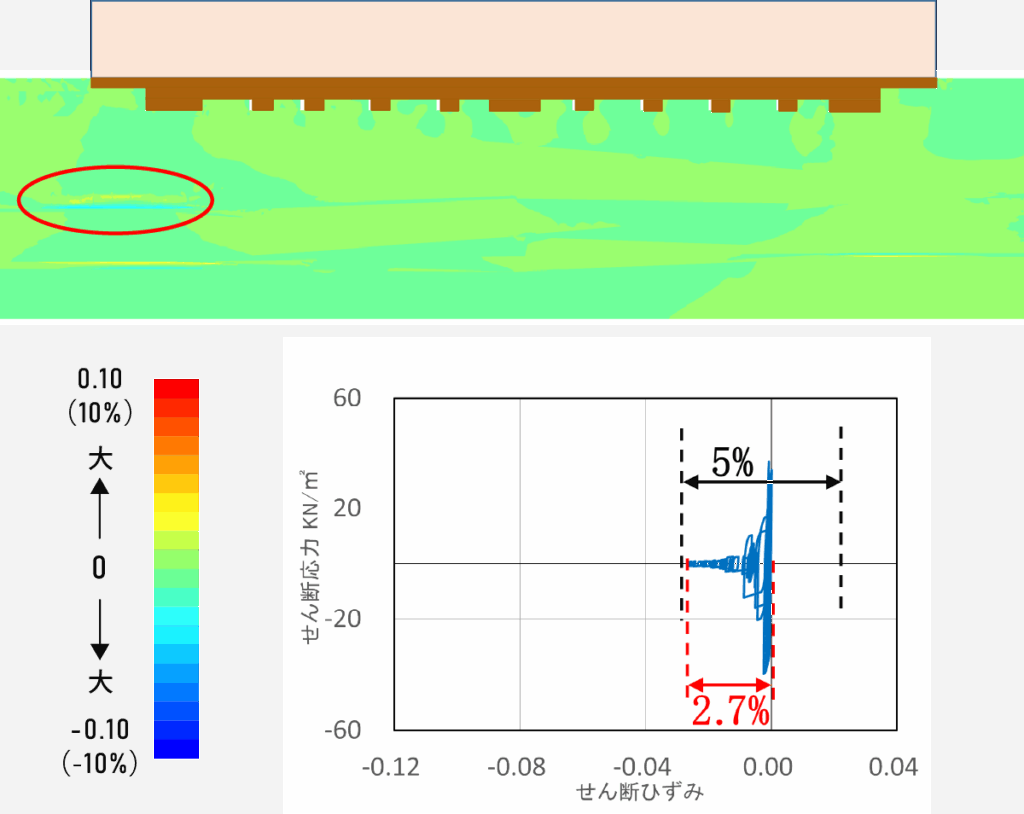
The calculated shear strain amplitude is 2.7%, which is below the 5% threshold, indicating that the likelihood of liquefaction is low.